
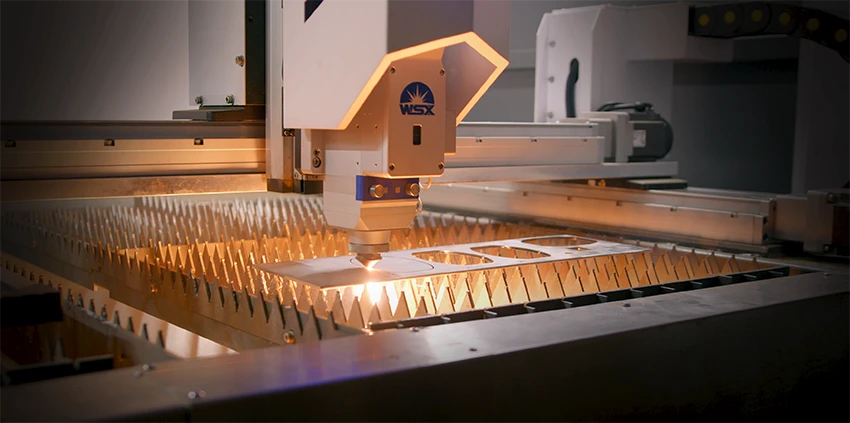
Filming heavy machinery is a challenge entirely driven by reflection. Stainless steel, brushed metal, and chromed surfaces are essential components of high-quality industrial equipment, yet they act like mirrors for your video lighting. The result is often harsh, distracting glare that obscures critical operational details.
Successfully documenting a piece of heavy equipment—common in the industrial centers near Commerce City—requires you to control the environment, not just the camera. This is not about expensive film lighting; it is about clever positioning and cheap diffusion.
Here are three techniques we use to turn highly reflective metal surfaces into clean, professional assets for technical video documentation.
1. The Inverse Square Law of Diffusion
(The Tarp Trick)
The fastest way to eliminate glare is to make your light source massive. Glare occurs when the reflection of a small, bright light source (like a standard LED panel or the sun) hits the metal surface. The surface acts like a mirror, reflecting that tiny, harsh light directly into the lens.
The Technique: You must diffuse the light across the entire surface of the metal. If your light source is five times the size of the reflective surface you are filming, the reflection becomes an even, soft white light, not a harsh hotspot.
The Implementation: Hang a large, white translucent sheet—a white shower curtain, a large photo diffusion panel, or even a cheap white tarp—between your primary light source and the machinery. This makes the entire sheet the light source, and the metal will reflect the large, soft surface instead of the harsh bulb. This works just as well in a brightly lit Commerce City warehouse as it does in a darkened studio environment.
2. The Negative Fill and Flagging Technique
Once you have controlled your light, you must control the absence of light. Glare is not always caused by your intentional lighting; it is often caused by stray, ambient light bouncing off walls, ceilings, or windows.
Negative fill is the term for blocking or absorbing light you do not want.
The Technique: Position a large, solid black material (called a "flag" or "cutter") directly opposite your key light, just outside the camera's frame. Black foam core board or thick black fabric works perfectly.
The Implementation: If you are filming the side of a stainless steel tank, the black flag absorbs stray light bouncing back from the environment. This creates a clean, dark line on the side of the tank, enhancing the contrast and definition of the machinery while pulling out distracting highlights. This technique is non-negotiable when trying to film polished metal in a large, bright space like a distribution center.
3. The Polarization Filter
(The Chemical-Free Solution)
For high-speed technical video where movement is key and large flags are impractical, a Circular Polarizer (CPL) filter is the essential tool. This technique solves the issue before the light even hits the sensor.
The Science: Light reflecting off non-metallic surfaces (like glass or water) is polarized. While stainless steel is metallic, the light bouncing off its surface is often partially polarized, especially when reflecting the sky or large windows.
The Implementation: Screw a CPL filter onto the front of your camera lens. As you rotate the filter, watch the glare on the metal surface through your viewfinder. The filter blocks polarized light waves, allowing you to dial down the harsh reflections on the metal and darken the overall reflection. This effect gives you, the cinematographer, granular control over the reflectivity of the stainless steel without requiring you to move a single light or machine.
Key Takeaways for Technical Utility
Filming heavy machinery is fundamentally a problem of reflection management. By prioritizing the diffusion of your light (Tarp Trick), blocking unwanted ambient light (Negative Fill), and filtering polarized reflections (CPL), you ensure your technical video documentation is clean, clear, and focused on the precision of the machinery, not the distracting glare.
About the author: