5 OSHA Standards Your Videographer Must Know Before Stepping on the Factory Floor
(And Why It Mitigates Risk)
I hope you enjoy reading this blog post. If you want my team to just do your video content for you, click here.
Author: Rob Nickels | Executive Producer & Founder of Born Tomorrow
Dec 3, 2025
For a Plant Manager, a videographer is usually not an asset. They are a liability.
When a creative agency walks onto your floor, you see a stranger with heavy tripods, distracting lights, and zero situational awareness. You see a trip hazard. You see a distraction that could cause a recordable incident. You see a potential safety violation that could impact your P&L.
Most creative agencies see a factory as a "cool backdrop." I see it as a controlled environment with zero margin for error.
Compliance is not about avoiding a fine this quarter; it is about establishing a culture of safety that mitigates long-term liability. For manufacturing operations, especially those situated near Commerce City, CO, a non-compliant or confusing training video is a high-risk asset.
The video must perform two tasks: it must train employees effectively, and it must provide verifiable documentation for any audit.
The Filter: Why Your Wedding Videographer Can't Shoot This
There is a fundamental difference between a "cinematic" mindset and an "industrial" mindset. A cinematic shooter will prioritize aesthetics over protocol. An industrial video specialist prioritizes protocol over everything.
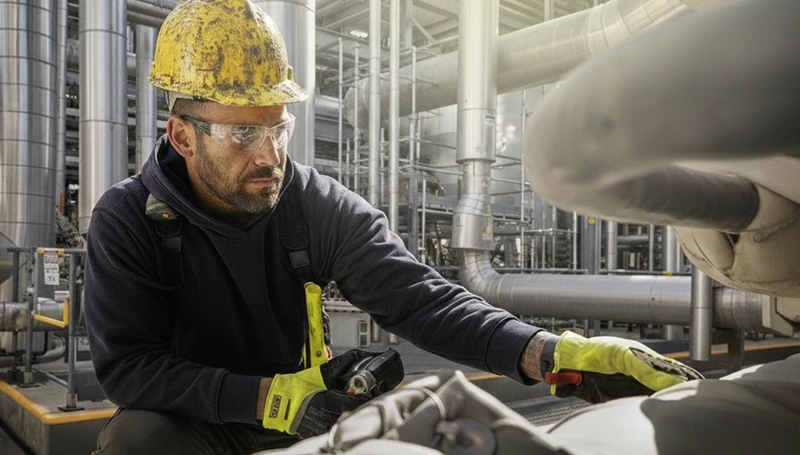
This distinction starts before we even enter the building. I own my own Personal Protective Equipment (PPE). I arrive with steel-toed boots, a hard hat, and ANSI-rated safety glasses. I do not need your Safety Officer to scramble to find me a spare vest. I am not a tourist in your facility; I am a contractor who is ready to work.
The 5 Core Standards Your Videographer Must Know
If your current video partner cannot explain these five concepts, they are a risk to your safety record.
1. Identify the High-Risk Standard (LOTO & HazCom)
You cannot script effectively until you know where the real liability lies. In manufacturing, the most frequently cited OSHA violations year after year often involve Control of Hazardous Energy (Lockout/Tagout - 29 CFR 1910.147) and Hazard Communication (HazCom - 29 CFR 1910.1200).
Your script needs to address the specific, granular steps required by these standards. This level of detail shows that you understand the financial risk of these common violations and provides focused, tactical content.
For Lockout/Tagout (LOTO): The video must visually and verbally cover the six required elements of a LOTO program, including the specific sequence of shutting down, isolating, and applying locks. I know what a Red Tag means, and I will never ask an operator to "just energize it for a second" for a shot.
For HazCom: The script must visually present the Safety Data Sheet (SDS) accessibility and clearly demonstrate how employees interpret the new GHS pictograms and labeling requirements.
2. Geotarget the Risk: Use Your Facility's Specific Geography
Video authority is built on relevance. For compliance training to be effective, it must feel like it was made specifically for the crew watching it. Instead of general locations, the script must ground the instruction in the local reality of the Denver Metro area.
If your facility is located near the Crossroads Commerce Park (Adams County) or off I-70 in Commerce City, use that.
Script Narration Example: "In this Commerce City facility, all hazardous waste containers are stored in the designated Lock-Up near the I-70 shipping dock."
Visual Strategy: Do not use stock footage of a generic plant. We film the specific industrial park, the actual emergency eyewash station, and the company-specific signage. This reinforces that the training is mandatory for this location and prevents a general, forgettable lesson.
3. Replace Jargon with Action (Show, Don't Read)
General Industry regulations (OSHA 29 CFR 1910) require training to be presented "in a manner that the employee can understand." Technical accuracy is non-negotiable, but your script must make complex concepts actionable.
For example, instead of explaining the definition of Machine Guarding (29 CFR 1910.212), the script should force a visual demonstration of the hazard.
Goal: Demonstrate the "nip point" on a conveyor belt.
Script Dialogue: (Visual shows a close-up of two rotating gears) Narrator: "This gap is called a nip point. It is the number one crushing hazard on this machine. If the guard is broken or removed, shut down the line immediately and report it."
The action must clearly and immediately precede the verbal explanation.
4. Anchor Your Script in the Post-Video Assessment
OSHA compliance training often requires verification that the training was understood, not just viewed. This is especially true for mandatory topics like Respiratory Protection (29 CFR 1910.134).
Before writing a single scene, we design the three most critical quiz questions. The video script must then be structured to highlight the correct answer.
Quiz Question: "What is the acceptable facial hair length when using a tight-fitting respirator?"
Script Scene: A dedicated segment showing the correct seal check procedure, with the narrator explicitly stating: "A proper seal requires a clean-shaven surface; a beard or stubble compromises the fit, rendering the respirator useless."
This ensures key retention, turning the video into a functional teaching tool rather than passive entertainment.
5. Final Review: Filter the Script through the Regulator’s Lens
The final step is the most crucial for achieving true authority. The script is not ready for production until a Certified Safety Professional (CSP) or an in-house engineer has formally signed off on every technical step.
Video production teams often miss small, but legally critical, details:
The wrong type of Personal Protective Equipment (PPE) is shown (e.g., safety glasses instead of goggles for chemical splash).
The Fall Protection procedure (like harness inspection) skips a mandatory step.
Foreign Object Debris (FOD): We ensure our own gear is secured so we don't introduce hazards into the shot or the machinery.
An audit-proof video demonstrates due diligence because the script confirms your protocols meet or exceed the General Industry Standards (1910). This rigorous validation transforms the video from a generic training tool into a powerful piece of evidence that risk has been successfully managed for your company.
Frequently Asked Questions About Industrial Videography
Q: Do you carry your own Liability Insurance and PPE?
A: Yes. I carry a commercial liability policy specific to industrial production. I also arrive site-ready with my own PPE, including steel-toed boots, hard hat, high-vis vest, and ANSI-rated safety glasses. I do not require your safety officer to source gear for me.
Q: How do you handle Lockout/Tagout (LOTO) protocols during filming?
A: I respect the Red Tag. I will never ask an operator to energize a locked-out machine for a "better shot." I film around your safety protocols, not through them. If a machine is down for maintenance, we document it as-is or schedule around it.
Q: Can you film in high-noise or spark-hazard environments?
A: Yes. I use directional boom microphones to isolate audio in loud factories and can employ telephoto lenses to capture welding or grinding operations from a safe distance, ensuring no spark hazards affect the camera gear or the operator.
Q: What is your process for Foreign Object Debris (FOD) prevention?
A: In aerospace and precision manufacturing environments, I secure all lens caps, batteries, and media cards. No loose gear is ever placed on machinery or near intake valves. My equipment footprint is minimal to prevent trip hazards in active walkways.
Q: Do you sign NDAs for proprietary manufacturing processes?
A: Absolutely. I frequently work with manufacturers in Commerce City and Golden who have proprietary assembly lines. I am happy to sign Non-Disclosure Agreements and can blur sensitive IP (like whiteboards or screens) in post-production.
The Safe Next Step
Do not risk your safety record on a generalist. You need a partner who views compliance as the foundation of the project.
If you're ready to turn your process into an asset that boosts sales and recruiting while building credibility automatically, let’s develop your Factory Growth System.
Schedule your free Video Impact Audit today. We’ll look over your current content, point out the gaps, and explain how one video can spread across your entire brand.
About the author:
Rob Nickels
Executive Producer & Founder of Born Tomorrow
20 years experience working with over 100 clients
around the world. Rob has created video projects
for companies such as SpaceX, The United Nations,
Facebook, Ford, Toyota, and Pepsi. He specializes in
creating brand videos for manufacturing companies
in Colorado. His video expertise is creating brand
centered and story driven projects that deliver ROI.